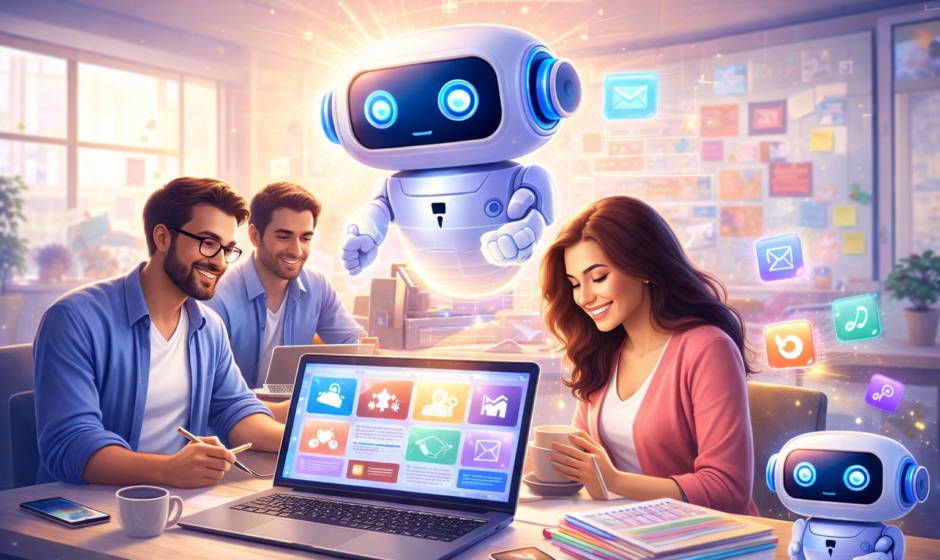

AI creative tools news has become one of the fastest-growing topics in digital media, marketing, design, publishing, and entertainment. From text generation and image creation to music composition and video editing, artificial intelligence is now deeply embedded in the creative process. What was once seen as an experimental technology is now part of everyday workflows for writers, marketers, designers, filmmakers, educators, and entrepreneurs.
The growing attention around AI creative tools is not just about automation. It is about transformation. These tools are changing how ideas are developed, how quickly content can be produced, and how individuals and businesses compete in crowded digital spaces. A solo creator can now build visuals, draft articles, generate social media copy, edit videos, and even create voiceovers without needing a large production team. That shift has made AI one of the biggest forces in modern creative work.
At the same time, the rise of creative AI tools has brought major questions. People want to know which tools are worth using, how reliable they are, whether they improve quality or simply increase speed, and what the long-term impact will be on creative professions. News around this space often focuses on product launches, major updates, ethical debates, copyright issues, and changing expectations in industries that rely on original work.
This article explores the world of AI creative tools news in depth. It covers what these tools are, why they matter, the biggest categories of AI-powered creative software, the advantages they offer, the concerns they raise, and the trends shaping their future. Whether you are a content creator, business owner, marketer, designer, student, or simply curious about the topic, this guide will help you understand why AI creative tools are getting so much attention and what that means in practical terms.
What Are AI Creative Tools?
AI creative tools are software platforms that use artificial intelligence to assist with or generate creative work. These tools can support tasks such as writing blog posts, designing marketing graphics, editing photos, generating videos, composing music, building presentations, and producing voice content. Some are built for one specific function, while others are designed as all-in-one creative assistants.
The core idea behind these tools is simple: they reduce the time and effort needed to go from concept to finished output. Instead of starting with a blank page or blank canvas, users can begin with AI-generated ideas, drafts, templates, or visual options. This makes the creative process faster and often more accessible for people who may not have advanced technical skills.
The rise in AI creative tools news reflects how quickly these platforms are evolving. New features appear regularly. Tools that once produced rough outputs are becoming more polished and useful. What used to take hours can now take minutes, especially for repetitive or structure-based tasks.
AI creative tools generally fall into several major categories:
- AI writing tools
- AI image generation tools
- AI video creation and editing tools
- AI music and audio tools
- AI design and branding tools
- AI presentation and productivity tools
Each category serves a different purpose, but they all support one larger trend: the merging of creativity and intelligent automation.
Why AI Creative Tools News Is Growing So Quickly
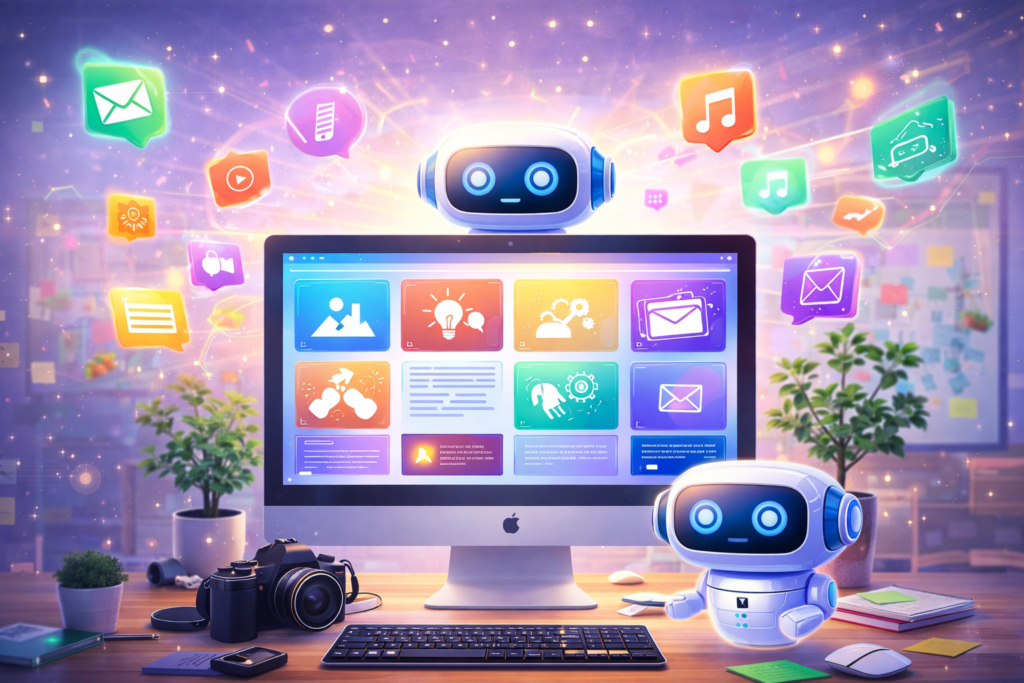
The explosion of interest in AI creative tools news is driven by more than hype. There are clear reasons why creators, businesses, and platforms are paying close attention.
1. Speed has become a competitive advantage
Content demand is higher than ever. Brands need blogs, emails, short videos, social media posts, thumbnails, product descriptions, ad creatives, and landing pages on a constant basis. AI tools help meet that demand faster. Businesses that once struggled to keep up with content production now see AI as a way to scale.
2. Barriers to entry are lower
A person no longer needs to be an expert graphic designer, copywriter, or video editor to produce decent creative assets. AI tools guide beginners through the process and generate first drafts that can be refined. This has opened new opportunities for freelancers, small businesses, and solo founders.
3. Updates happen constantly
AI products are improving at a remarkable pace. New image models, better editing features, smarter writing assistants, and more advanced personalization options are announced frequently. That creates a steady stream of news and keeps public interest high.
4. Industries are being reshaped
Publishing, advertising, e-commerce, filmmaking, education, and software development are all being affected by creative AI. News coverage grows when technology moves from niche use to industry-wide disruption.
5. People are still figuring out the rules
Questions around originality, intellectual property, bias, privacy, and job displacement continue to fuel discussion. AI creative tools news is not only about innovation. It is also about the legal, ethical, and professional boundaries still being defined.
Major Types of AI Creative Tools in the News
AI Writing Tools
AI writing tools are among the most widely used creative technologies today. They help with brainstorming, outlining, drafting, editing, summarizing, rewriting, and SEO optimization. These tools are often used for blog posts, emails, product descriptions, ad copy, scripts, captions, and academic support.
For marketers, they speed up campaign production. For writers, they can reduce the friction of starting. For businesses, they make content generation more scalable.
The most common uses include:
- Generating article outlines
- Writing first drafts
- Improving grammar and clarity
- Adjusting tone for different audiences
- Creating SEO-focused content
- Repurposing long-form content into short-form pieces
The reason AI writing tools remain central in AI creative tools news is that language is foundational to almost every business and media activity online.
AI Image Generation Tools
AI image tools allow users to create original visuals from text prompts or edit existing images with intelligent assistance. These platforms are changing how marketing teams, illustrators, social media managers, and entrepreneurs produce visuals for campaigns, branding, and storytelling.
Popular use cases include:
- Social media graphics
- Product mockups
- Concept art
- Book covers
- Advertising visuals
- Blog feature images
- Storyboards
These tools are especially important because strong visuals play a major role in engagement. In many industries, the ability to produce eye-catching graphics quickly can directly affect reach and conversions.
AI Video Tools
Video is one of the most in-demand content formats online, and AI is rapidly changing how it is made. AI video tools can help with script generation, scene planning, editing, subtitle generation, voice dubbing, avatar presentations, and short-form video creation.
This category is heavily featured in AI creative tools news because video production has traditionally required more time, budget, and technical skill than other content types. AI is making it faster and easier.
Common uses include:
- Promotional videos
- Explainer videos
- Short-form social media clips
- Training and educational videos
- Script-to-video workflows
- Auto-captioning and translation
AI Audio and Music Tools
AI is also entering the world of sound. Audio creators can now use AI to clean recordings, remove noise, generate voiceovers, clone voices in some contexts, compose background music, and assist with podcast editing.
This is especially useful for:
- Podcasters
- Video creators
- Advertisers
- E-learning companies
- Musicians experimenting with composition
As these tools improve, they continue to expand the scope of what solo creators can produce.
AI Design Tools
Design-focused AI tools help with branding, layout, presentation building, logo concepts, color schemes, and ad creatives. Rather than replacing designers entirely, many of these tools act as support systems that generate options and accelerate repetitive tasks.
Their main value lies in helping users:
- Create assets faster
- Explore multiple visual directions
- Maintain brand consistency
- Simplify non-technical design tasks
Key Benefits of AI Creative Tools
Faster Workflow
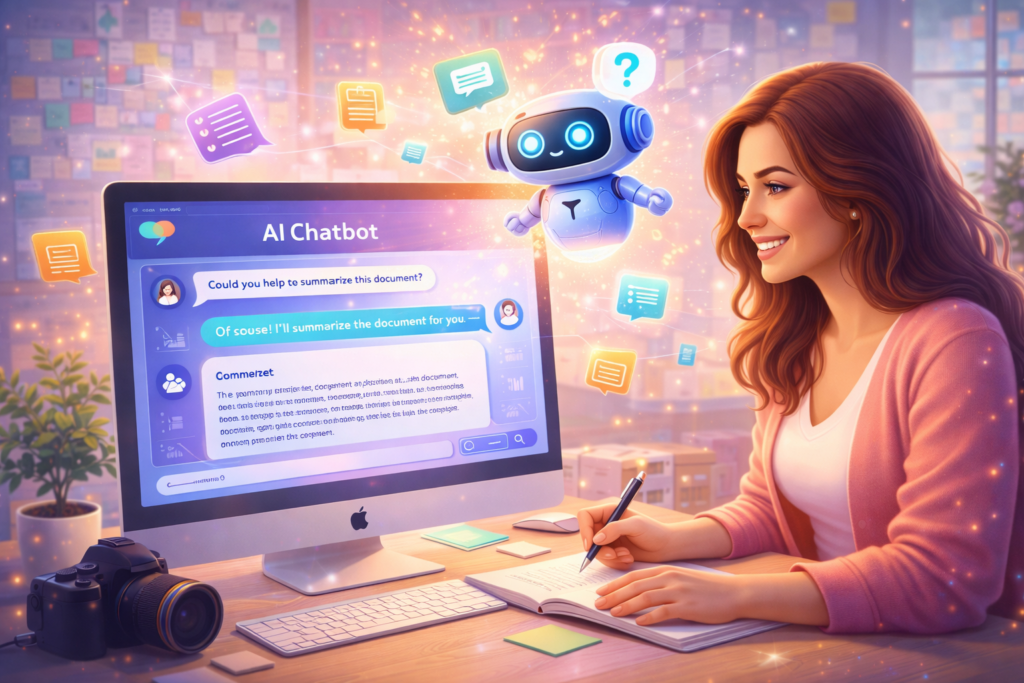
One of the clearest benefits is speed. AI can generate starting points almost instantly. Instead of spending hours creating from scratch, users can begin with a usable base and focus their energy on improvement. This shortens production timelines and increases output.
Better Idea Generation
Creative blocks are common. AI tools can suggest headlines, visual concepts, script angles, design directions, and alternate phrasings. Even when the output is not perfect, it can unlock momentum.
Cost Efficiency
Hiring multiple specialists for every creative need is expensive. AI tools allow smaller teams to handle more tasks internally. A startup may use AI for blog content, ad visuals, email drafts, and presentations without building a full in-house creative department.
Greater Accessibility
Not everyone has formal training in design, writing, or editing. AI tools help bridge the skill gap. This gives more people the ability to create professional-looking content, especially in business and education settings.
Scalability
Brands often need high volumes of content across platforms. AI makes it easier to adapt one idea into many formats. A blog post can become email copy, social media captions, video scripts, and ad headlines in a fraction of the usual time.
Personalization
Some AI tools help tailor messaging or visuals for different audience segments. This matters because personalized content often performs better than generic material.
Challenges and Concerns Around AI Creative Tools
While the benefits are significant, AI creative tools news also includes serious concerns that users should understand.
Quality Control
AI can produce content quickly, but speed does not guarantee quality. Outputs may be repetitive, vague, factually weak, or visually inconsistent. Human review remains essential.
Originality Issues
Some AI-generated work can feel generic if it is not guided well. Strong creative work still depends on taste, intention, editing, and strategic thinking. Without those elements, content can blend into the noise.
Copyright and Ownership Questions
One of the biggest ongoing discussions in AI creative tools news involves intellectual property. People want clarity on training data, rights to generated content, and how AI-generated work interacts with existing copyright law.
Ethical Concerns
AI can be misused to generate misleading visuals, imitation content, or manipulative media. There are also concerns about bias, representation, and transparency when audiences do not know that AI was involved.
Job Anxiety
Many creative professionals worry that AI may reduce opportunities or lower the value of skilled work. In reality, the picture is more complex. Some tasks may be automated, but new roles are also emerging around AI direction, prompt design, editing, strategy, and quality control.
Dependence on Tools
If creators rely too heavily on AI, they may weaken their own creative muscles. The best outcomes usually come when AI supports human thinking rather than replacing it.
How AI Is Changing the Role of Human Creators
A major theme in AI creative tools news is the question of replacement versus collaboration. In practice, the strongest creative results usually come from partnership, not substitution.
AI is excellent at speed, pattern recognition, and structure. Humans remain stronger in emotional intelligence, cultural judgment, storytelling depth, originality, and brand sensitivity. Great creative work often depends on nuance. It requires knowing what to say, what to avoid, and how to make something feel alive rather than merely correct.
This means the creator’s role is shifting. Many professionals are becoming editors, curators, strategists, and directors of AI-assisted workflows. Instead of doing every task manually, they guide the system, refine the results, and add the human layer that makes content meaningful.
In other words, AI may reduce some forms of production labor, but it increases the importance of judgment.
AI Creative Tools in Marketing and Business
Businesses are among the biggest adopters of creative AI tools. The reason is simple: they need content constantly, and AI helps them produce it more efficiently.
Content Marketing
AI helps businesses write blogs, newsletters, captions, product pages, and downloadable resources. It also assists with topic research, keyword targeting, and repurposing content across channels.
Advertising
Ad teams use AI to test headline variations, write copy, generate visuals, and adapt creatives for different audience segments. This can improve agility in campaign testing.
E-commerce
Online sellers use AI to create product descriptions, ad creatives, listing images, and promotional videos. This is especially useful when managing large inventories.
Internal Communication
AI also supports business presentations, reports, onboarding materials, and training content. Creative AI is not limited to public-facing media. It is increasingly used inside organizations as well.
Because of these practical benefits, AI creative tools news remains highly relevant for business owners, agencies, and digital teams trying to stay competitive.
SEO and AI Creative Tools
SEO is one of the biggest reasons people search for AI creative tools news. Businesses want to know whether AI can help them rank, produce optimized content, and scale organic traffic.
The answer is yes, but with an important condition: AI must be used thoughtfully.
AI can help with:
- Keyword-based content outlines
- Topic clustering
- Meta descriptions and title tags
- FAQ creation
- Internal linking suggestions
- Content refreshes
- Search intent matching
However, SEO content still needs real value. Search engines increasingly reward useful, clear, people-first content. Articles that are stuffed with keywords but lack depth are less likely to perform well over time.
That is why the best SEO strategy combines AI efficiency with human expertise. AI can build the structure, but humans should shape the substance.
Trends Shaping the Future of AI Creative Tools
Multimodal Creation
More platforms are combining text, image, video, and audio capabilities in one place. This means creators can move from idea to full campaign within a single ecosystem.
Real-Time Collaboration
AI is becoming more interactive. Instead of generating one-off outputs, tools are starting to collaborate with users in real time, refining work as instructions evolve.
Brand-Aware AI
Businesses want AI systems that understand their tone, style, visual identity, and audience. Customized AI trained around brand guidelines is becoming increasingly valuable.
AI for Short-Form Content
Short videos, social media carousels, ad snippets, and quick promotional assets are a major growth area. AI excels in helping teams produce high-volume, platform-ready content fast.
Smarter Editing, Not Just Generation
The next wave of tools is not only about generating content. It is about improving, adapting, translating, and optimizing existing work. This makes AI more practical for professional use.
Increased Regulation and Policy Attention
As adoption grows, legal and policy discussions will become more important. Transparency, licensing, and user rights are likely to remain central in future AI creative tools news.
How to Use AI Creative Tools Effectively
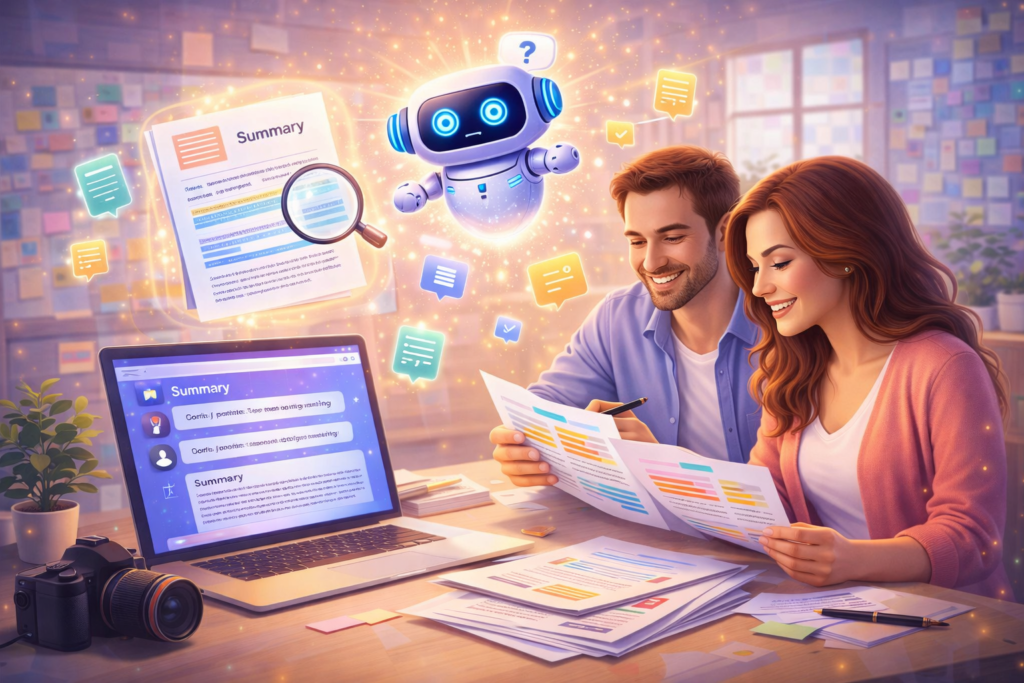
To get the best results, users need more than access to software. They need a smart process.
Start with a clear goal
Know what you want the tool to produce. A vague prompt often leads to weak results.
Use AI for the first 60 percent
Let AI help with ideation, structure, and drafts. Then step in to refine tone, accuracy, and originality.
Edit aggressively
Never assume the first output is the best output. Revision is where quality is built.
Protect your voice
If you are a brand or creator, your tone matters. Use AI to support your style, not flatten it.
Check facts and details
AI can make mistakes. Always verify important claims, especially in educational, legal, medical, or technical content.
Combine tools wisely
Many creators get better results by pairing writing AI with design AI, video AI, and editing tools rather than relying on one solution for everything.
Who Benefits Most From AI Creative Tools?
AI creative tools are useful across many professions and industries.
Content creators benefit from faster production and idea support.
Marketers benefit from scalable campaigns and cross-channel adaptation.
Small businesses benefit from lower costs and greater independence.
Educators benefit from presentation, lesson, and resource support.
Designers benefit from rapid concepting and workflow acceleration.
Writers and publishers benefit from drafting, editing, and promotion support.
Agencies benefit from handling more volume without proportionally increasing labor.
The impact is broad because creativity touches nearly every digital workflow.
Frequently Asked Questions About AI Creative Tools News
What does AI creative tools news usually cover?
It usually covers product launches, feature updates, industry adoption, legal debates, ethical concerns, and new ways creators and businesses are using AI.
Are AI creative tools replacing human creators?
Not entirely. They are changing workflows and automating some tasks, but human judgment, strategy, and originality remain essential.
Which industries are most affected?
Marketing, media, publishing, e-commerce, education, entertainment, and design are among the industries seeing the biggest changes.
Can AI creative tools help with SEO?
Yes. They can assist with outlines, keyword use, metadata, topic development, and content scaling, but human editing is still important for quality.
Are AI-generated visuals and text always original?
Not always in the creative sense. They may be technically new outputs, but originality depends heavily on how they are directed and refined.
What is the biggest risk of using AI creative tools?
The biggest risks include low-quality outputs, factual errors, copyright concerns, and overreliance on generic content.
Final Thoughts
AI creative tools news continues to grow because these technologies are no longer on the edge of the creative world. They are at the center of it. Businesses use them to move faster. Creators use them to generate ideas and expand production capacity. Marketers use them to scale campaigns. Designers and writers use them to test concepts and reduce repetitive work.
Still, the most important truth is this: AI does not automatically create great work. It creates possibilities. The final quality depends on the human behind the process. Good prompts matter. Strong editing matters. Clear goals matter. Taste matters. Strategy matters.
The real value of AI creative tools is not that they eliminate creativity. It is that they change how creativity is developed, refined, and delivered. They give people more starting points, more speed, and more ways to experiment. But they also demand more responsibility, more judgment, and more care.
For anyone following AI creative tools news, the opportunity is clear. This is not just a passing trend. It is a long-term shift in how digital creation works. The people and businesses that learn to use these tools wisely will be better positioned to adapt, compete, and create work that stands out in an increasingly automated world.